Patent Analytics & Technology Landscape for EV Battery Innovation
Technology‑driven industries such as electric mobility evolve rapidly, making it essential for companies to understand the patent landscape surrounding emerging technologies. Patent analytics and technology landscaping provide strategic insights into innovation trends, competitor activities, and potential opportunities for future research and development.
Darsh Analytics supports organizations by transforming complex patent datasets into clear, actionable intelligence. Through structured analytics and visualization techniques, our team helps companies understand technology evolution, identify key players, and uncover innovation white spaces that can guide strategic decisions.
In this project, an automotive technology company approached Darsh Analytics to analyze the competitive landscape and innovation trends related to electric vehicle (EV) battery technologies.
Project Description
An automotive technology company focusing on next‑generation electric vehicle battery systems required a comprehensive view of the global patent landscape. The client wanted to understand how innovation in EV battery technologies was evolving, which companies were leading patent filings, and which regions were most active in this domain.
The goal of the project was to provide strategic insights that could guide the client’s research and development roadmap as well as their intellectual property strategy. The client also wanted to identify potential technology gaps or white spaces where new innovations could be pursued.
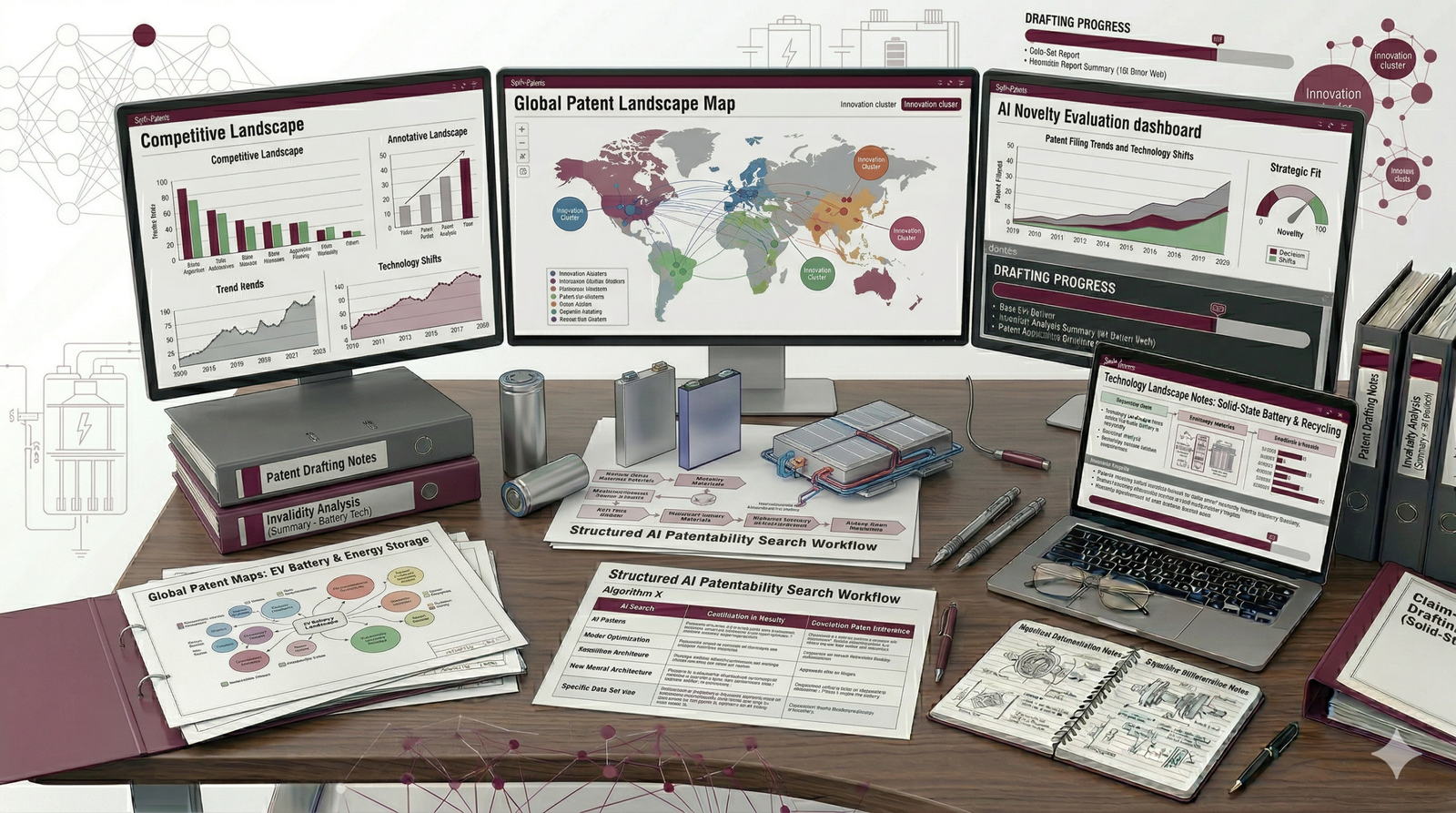
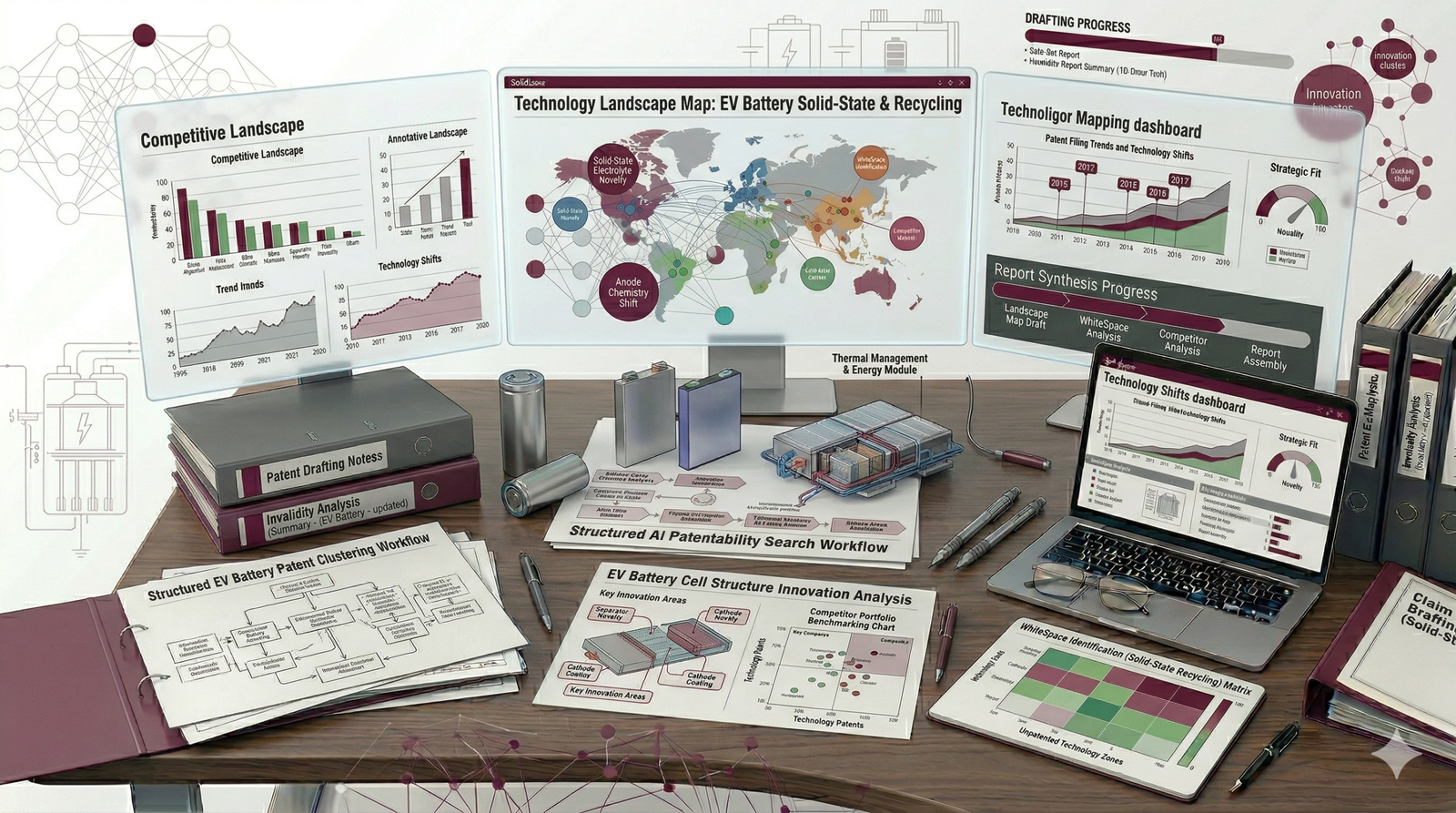
Darsh Analytics conducted a structured patent analytics study using global patent datasets related to EV battery technologies. Our team analyzed filing trends, leading assignees, geographic distribution of patents, and emerging technological segments within the field.
The results were delivered through detailed reports and visual analytics dashboards, enabling the client to clearly understand the competitive landscape and emerging innovation opportunities.
Project Details
- Client Type: Automotive Technology Company
- Date: 2024
- Service Category: Patent Analytics & Technology Landscape
- Technology Domain: Electric Vehicle Battery Technologies
- Objective: Analyze global patent activity and identify innovation trends and opportunities
Project Participants
- Patent Analytics Team: Darsh Analytics
- Project Lead: Senior Patent Analytics Specialist
- Data Analyst: Patent Data & Visualization Expert
- Client Team: R&D Strategy Team & IP Manager
Challenge
The client needed strategic insights into the rapidly evolving EV battery technology space. Without a clear understanding of competitor activity and patent filing trends, it would be difficult to align their R&D strategy with emerging technological opportunities.
The challenge was to analyze large volumes of patent data and extract meaningful insights that could support both technology planning and IP strategy decisions.
Our Approach
Darsh Analytics applied a structured patent analytics methodology:
- Collected and cleaned global patent datasets related to EV battery technologies
- Analyzed patent filing trends across multiple jurisdictions
- Evaluated leading assignees and competitor patent portfolios
- Identified technology clusters and emerging innovation areas
- Highlighted potential technology white spaces
- Delivered visual analytics dashboards and structured reports
Outcome
The patent analytics study provided the client with clear insights into the competitive and technological landscape of EV battery innovations.
As a result:
- The client gained a clear understanding of competitor patent activity
- Key innovation trends and emerging technologies were identified
- Technology white spaces were discovered for potential R&D focus
- Strategic decisions related to R&D investment and IP portfolio development were strengthened